Description
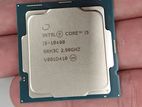
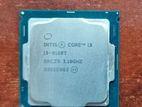
The Intel Core i5-8600K is a 6-core / 6-thread desktop CPU from Intel’s 8th Generation Coffee Lake lineup, targeted at mainstream enthusiasts who want strong single- and multi-core performance with overclocking potential.
🧩 Key Specifications
Launch / Platform: 8th Gen Intel Core (Coffee Lake) desktop processor
Cores / Threads: 6 cores and 6 threads (no Hyper-Threading)
Base Clock: 3.60 GHz
Max Turbo (Boost) Frequency: Up to 4.30 GHz
Smart Cache: 9 MB shared L3 cache
Processor Technology: 14 nm (Coffee Lake)
TDP (Thermal Design Power): 95 W
Socket: LGA1151 (300-series chipsets) — requires a compatible motherboard (e.g., Z370/Z390)
Unlocked Multiplier: Yes — can be overclocked on Z-series boards
📊 Performance & Features
⚙️ CPU Architecture
Built on Intel’s Coffee Lake architecture, the i5-8600K brings six physical cores without SMT/Hyper-Threading, which helps with gaming and threaded workloads.
Its unlocked multiplier makes it a popular choice for enthusiasts who want to overclock and push frequencies beyond stock limits for extra performance.
🧠 Cache & Bus
9 MB Smart Cache helps reduce latency and improve data access efficiency across cores.
Uses Intel’s Turbo Boost 2.0 to scale clock speeds under heavier loads up to 4.3 GHz.
💻 Memory & I/O
Supports dual-channel DDR4 memory (officially up to DDR4-2666).
Offers 16 PCIe 3.0 lanes from the CPU for graphics and other expansion.
🖥 Integrated Graphics
Includes Intel UHD Graphics 630, usable for basic display output and light graphics tasks (not ideal for demanding games without a discrete GPU).
🎮 Typical Use Cases
Gaming: Strong single-core performance and higher base/boost clocks make this CPU good for gaming when paired with a decent GPU.
Everyday Productivity: Handles web browsing, office work, media consumption, and multitasking well.
Content Creation: Six cores help with mid-level content tasks such as photo/video editing, though not as strong as higher-end CPUs with more threads.
⚡ Pros & Cons
👍 Pros
Solid performance in games and general tasks
Overclockable for extra performance
Good balance of clocks and core count for many applications
👎 Cons
No Hyper-Threading: Only 6 threads limits multithreaded performance compared to CPUs with SMT enabled.
Requires compatible 300-series motherboard (not backward compatible with older 100/200-series without modifications).